
Updated 2026-11-21 · Reviewed for accuracy by the EKO Labs team. Educational only; not medical advice.
A recall can sound alarming, but the steps for checking one are simple. This guide summarizes what the U.S. Food and Drug Administration (FDA) says about drug recalls: what a recall is, how to find out whether your medicine is affected, what the recall classes mean and what to do next. It is general information, not medical advice, and it does not tell you what to take.
What is a drug recall?
According to the FDA, a drug recall is a voluntary action taken by a company to remove a defective drug from the market or to warn patients and consumers about a potential risk. The FDA says a recall may be started by the company on its own at any time, or recommended or requested by the FDA. The FDA’s role is to oversee the company’s recall strategy and to make sure adequate steps were taken, and it can take additional action if a recall is not effective.
How to check whether your medicine was recalled
The FDA says people may learn about a recall from the news, or from a notice from the manufacturer, their health care provider or their pharmacy. To check, follow these steps:
- Find the lot number on the labelPrescribing information (label) the official FDA document for a medicine, with its uses, warnings and side effects. or carton of your medicine. A recall usually applies to specific lots, not to every package of a product.
- Compare it with the lot numbers in the recall notice.
- Look at the official lists. The FDA posts company announcements on its Drug Recalls page and on its Recalls, Market Withdrawals & Safety Alerts page, and keeps a database of recalled medicines that shows the classification and the reason for the recall.
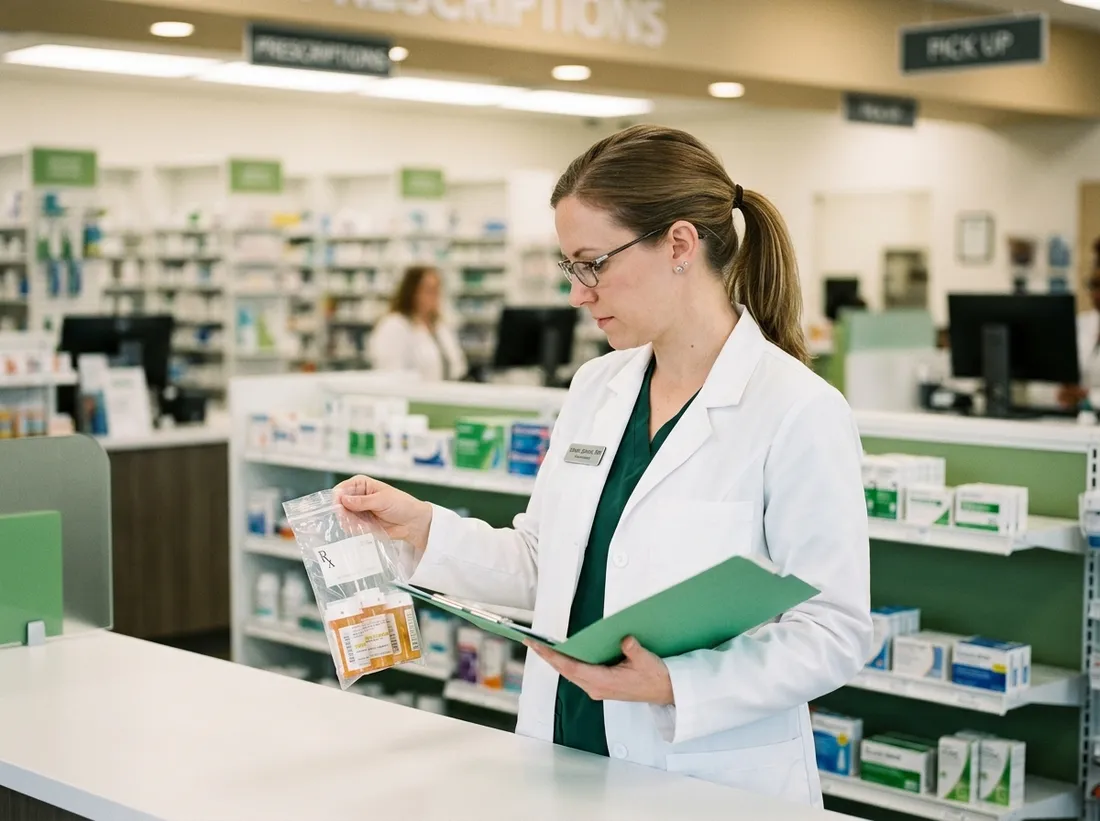
- Ask your pharmacist. They can tell you whether your fill is from an affected lot.
The FDA also notes that not every recall is announced on FDA.gov or in the news. Public notice is generally issued when a product was widely distributed or poses a serious health hazard. All recalls are listed in the FDA Enforcement Report.
What do Class I, II and III mean?
The FDA classifies recalls by the level of risk:
- Class I: a reasonable probability that using or being exposed to the product will cause serious adverse health consequences or death. These are the most serious recalls and are generally conducted at the consumer level.
- Class II: use may cause temporary or medically reversible health consequences, or the probability of serious consequences is remote. These are generally conducted at the retail level.
- Class III: use is not likely to cause adverse health consequences, for example certain minor labeling errors, defective packaging or incorrect expiration dates. These are generally conducted at the wholesale level.
A market withdrawal is different: the FDA describes it as a firm removing a product or correcting a minor violation that would not be subject to FDA legal action.
What to do if your medicine is recalled
- Follow the instructions in the notice. The FDA says class I notices generally give instructions for patients and recommends following the recalling company’s instructions.
- Do not stop on your own without checking. For class II and III recalls, the FDA says consumers can generally keep taking the medicine unless the company gives other instructions, and that in some cases stopping a medicine may be more harmful than continuing it. Call your doctor or pharmacist with questions.
- Ask about returns. Companies may advise returning recalled medicine to the place of purchase, and most retailers have return and refund policies for recalled products.
- Report problems. If you think a medicine caused a problem, you can report it to the FDA through MedWatch.
Recalls are not the same as safety communications
A recall removes or corrects a specific product. The FDA also publishes Drug Safety Communications to tell patients and health care professionals about new safety information on a medicine, which may lead to changes in the prescribing information or Medication Guide. A safety communication is not a recall, and a recall does not always mean a medicine is unsafe in general. Read the notice for the exact products, lots and instructions.
Questions to ask
- Is my medicine from one of the recalled lots?
- Should I keep taking it, switch to another lot, or get a replacement, and who decides?
- Where do I return the medicine, and will I get a refund or a replacement?
- Is there a notice from the FDA or the manufacturer I can read?
Related guides: how to report a side effect to the FDA, how to read a U.S. prescription label, how to dispose of unused medicines safely, what a drug shortage means and how to tell if an online pharmacy is safe.
Where to get help
Your pharmacist is the fastest way to check a lot number. You can also use the FDA’s Drug Recalls page at fda.gov. At EKO Labs, our team can answer general questions in Portuguese or English by phone, and decisions about your medicine always rest with your pharmacist and your prescriber.
Sources: FDA, “Drug Recalls” (fda.gov); FDA, “Understanding Drug Recalls: What to Know and What to Do” (content current as of May 6, 2026); FDA, “Recalls Background and Definitions” (content current as of March 20, 2026); FDA, “Recalls, Market Withdrawals, & Safety Alerts” and “Drug Safety Communications” (fda.gov). Accessed November 21, 2026. Recall lists change daily; confirm details with the FDA, the manufacturer and your pharmacist. This guide is general information, not medical advice.
Talk to our team. A licensed doctor makes every medical decision.