
Updated 2026-10-11 · Reviewed for accuracy by the EKO Labs team. Educational only; not medical advice.
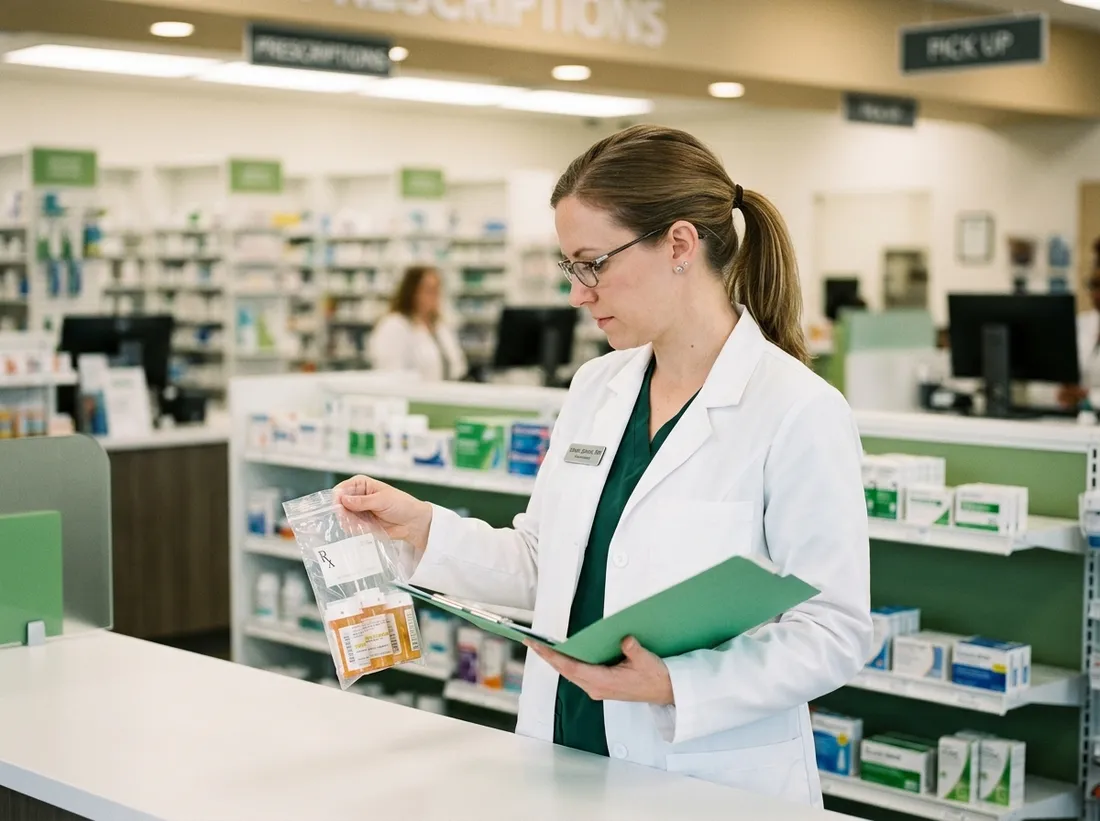
Sometimes a pharmacy tells you a medicine is “on back order” or “in shortage.” This guide explains what an official drug shortage is, why shortages happen, how to check the FDA shortage list, and what you can do if you can’t get your medicine. It is general information, not medical advice.
Do not stop, switch or change the dose of a prescription medicine on your own because it is hard to find; talk to your prescriber or pharmacist first. In an emergency, call 911.
What counts as a drug shortage
The Federal Food, Drug, and Cosmetic Act defines a drug shortage as a period when the demand or projected demand for a drug in the United States is greater than its supply. The U.S. Food and Drug Administration (FDA) tracks shortages at the national level, using information that manufacturers report. FDA considers a drug in shortage when, nationwide, supply is not meeting current demand or is not expected to meet projected demand.
Not every empty shelf is a shortage. FDA says that most reports of a medicine being out of stock at a pharmacy are temporary, local problems, often in distribution, that end when the pharmacy can reorder from its distributor.
Why shortages happen
- Manufacturing and quality problems: according to FDA, the most common cause.
- Production delays, or delays getting raw materials and components from suppliers.
- Sudden increases in demand: for example, semaglutide injection products were in shortage from 2022 because of increased demand.
- Discontinuations: FDA cannot require a company to keep making a drug, and it cannot require companies to increase production.
FDA explains that older sterile injectable drugs are especially vulnerable: few companies make them, production lines and raw-material suppliers are limited, and manufacturing is complex, so when one company has a problem, the others may not be able to make more quickly.
How to check the FDA shortage list
FDA publishes a free Drug Shortages Database with current and resolved shortages and discontinuations (start at fda.gov/drugshortages). Search by the generic name or active ingredient, not the brand name. Entries list specific products and presentations, the availability reported by each manufacturer and, sometimes, the reason for the shortage. FDA notes that when a product is shown as “available,” that is the latest information from the manufacturer, not an FDA decision that the shortage is over. Statuses change often, so check the date of the last update.
FDA also publishes a list of extended use dates it has accepted for some products in shortage. The American Society of Health-System Pharmacists (ASHP) keeps its own shortage list, which can differ from FDA’s.
What to do if you can’t get your medicine
- Call ahead and check more than one pharmacy, including mail-order pharmacies in your plan’s network. A local stock-out often ends after the next delivery.
- Ask your pharmacist whether another strength, package size or manufacturer, or a generic version, is available, and when the next delivery is expected. If another pharmacy has it, see our guide on how to transfer a prescription.
- Ask your prescriber about alternatives before you run out. Only your prescriber can change the medicine or the dose, and a new prescription may be needed.
- Check coverage: if your plan requires prior authorization for an alternative, see our guide on prior authorization and appeals.
- Don’t buy from unknown websites or sellers that offer hard-to-find medicines without a prescription; see our guide on how to tell if an online pharmacy is safe.
- Tell FDA: if the drug is not already in the Drug Shortages Database, patients can report a possible new shortage through FDA’s online public portal. Information about an existing shortage can be emailed to drugshortages@fda.hhs.gov.
Shortages and compounded medicines
Compounded medicines are made by a pharmacy and are not FDA-approvedFDA-approved the FDA reviewed the medicine's safety and effectiveness for a specific use.. Federal law limits how often pharmacies may compound drugs that are essentially copies of commercially available FDA-approved drugs. When a drug is on FDA’s shortage list, federal law and FDA policy give pharmacies and outsourcing facilities more room to compound it, which is why compounded semaglutide and tirzepatide became common during their shortages.
FDA confirmed in December 2024 that the tirzepatide shortage was resolved, and on February 21, 2025, it determined that the semaglutide injection shortage was resolved; the temporary transition periods for compounders ended in 2025. In its April 1, 2026 update, FDA said tirzepatide and semaglutide did not appear on its drug shortage list, and reminded pharmacies that compounding essentially copies is limited unless a prescriber determines and documents that a change makes a significant difference for an individual patient. FDA also notes that after a shortage ends, patients may still see short, local supply gaps. If you use a compounded medicineCompounded medicine a version prepared by a licensed pharmacy for a specific patient's prescription. It is not itself FDA-approved., ask your prescriber and pharmacy how these rules affect you; see our guide on brand-name vs. compounded medicines.
Prices during a shortage
FDA does not regulate drug prices. For concerns about drug pricing, FDA points to the Federal Trade Commission (FTC), which enforces competition and consumer-protection laws.
Questions to ask your pharmacist or prescriber
- Is this a national shortage or a local stock problem?
- When do you expect your next delivery?
- Is another strength, manufacturer or a generic version available?
- Can you check another location or a mail-order pharmacy?
- If I run out, what is a safe alternative for me, and does it need a new prescription?
- Will my insurance cover the alternative, or do I need prior authorization?
Sources: FDA, “Drug Shortages” (content current as of July 15, 2026); FDA, “Frequently Asked Questions about Drug Shortages”; FDA Drug Shortages Database; FDA, “FDA clarifies policies for compounders as national GLP-1GLP-1 (glucagon-like peptide-1) a hormone the gut releases after eating. It helps release insulin, slows stomach emptying and signals fullness. supply begins to stabilize” (updates from December 2024 to April 1, 2026); openFDA drug shortages data (consulted October 2026). This guide is general information, not medical advice.
Talk to our team. A licensed doctor makes every medical decision.